

10 things you probably didn’t know about SHIELD
From a Kickstarter campaign and a few signalproof caps to customers in more than 92 countries — this is the story behind SHIELD.
When people first discover SHIELD, they often see the products before they see the company behind them.
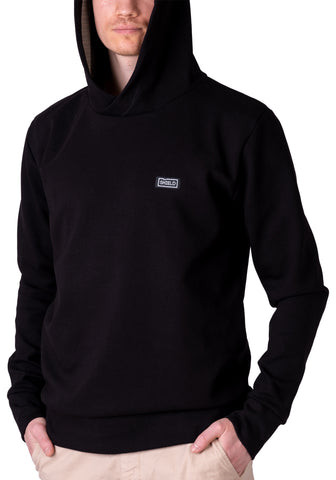
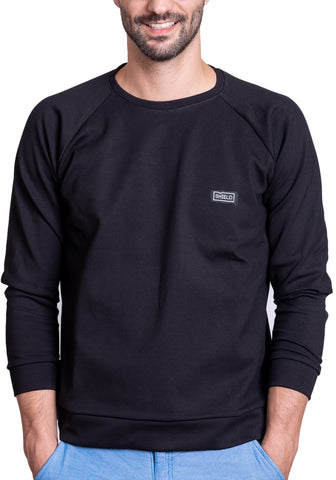
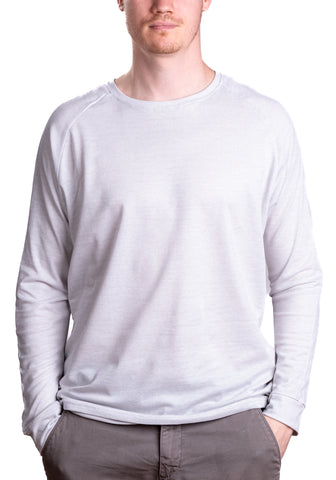
A hoodie. A cap. A T-shirt. A pair of boxer briefs.
And then comes the obvious question:
Who actually makes this stuff?
Is SHIELD a large clothing company? A technology company? A start-up? A European brand? Where are the products made? How long have you been doing this? And, perhaps most importantly, how much expertise is actually behind the products?
The answer is probably not what you expect.
SHIELD is a family-run European business that started with a simple idea, was funded by a Kickstarter community, and has spent years developing, testing and selling signalproof apparel around the world.
Here are 10 things you probably didn't know about SHIELD.
1. SHIELD was founded in 2016 — before EMF protection became a trend
SHIELD started in 2016.
At the time, EMF-protective clothing was a very niche idea. There weren't hundreds of brands selling signalproof hoodies, T-shirts and underwear online.
Our original idea was much simpler:
Could we make EMF protection something people could actually wear every day?
Instead of creating another technical-looking protective product, we wanted to combine shielding technology with normal clothing and accessories.
That idea became the foundation of SHIELD.
Today, the company has grown far beyond those first products, but the original philosophy remains: protection should be wearable, practical and accessible.
2. SHIELD was funded on Kickstarter
SHIELD didn't start with a huge investment fund or a multinational corporation behind it.
It started on Kickstarter.
Our first products were signalproof hats and caps, and people from around the world supported the idea enough to help us turn it into a real business.
That beginning still says something important about SHIELD.
We didn't start by asking:
“What can we sell?”
We started with:
“Can we make something people actually want to use?”
And that original community helped us take the first step.
3. We started with hats — not a complete clothing collection
Today, SHIELD has T-shirts, hoodies, underwear, jackets, blankets, sleep products and other signalproof accessories.
But that's not where we started.
We started with hats and caps.
We designed our own styles and integrated shielding materials into products that looked and felt like normal headwear.
From there, customers started asking the obvious question:
“Can you make this for the rest of the body?”
That question eventually led us from headwear into T-shirts, underwear, sweatshirts, hoodies, jackets and other garments.
In other words, our current product range wasn't designed all at once.
It evolved from years of customer feedback and product development.
4. SHIELD products have reached more than 92 countries
This might be one of the things we're most proud of.
SHIELD has customers in more than 92 countries around the world, with the USA, UK and Australia among our largest markets.
But the list becomes much more interesting when you look beyond the biggest countries.
SHIELD products have also found their way to places such as:
Venezuela. Seychelles. Nepal. Grenada.
And many other countries we never expected to see on our order list.
It's one of the strange and wonderful things about running a global online business.
You can be sitting in Europe and suddenly realize that someone on the other side of the planet is wearing something you designed.
5. SHIELD is based in Slovakia, in the European Union
Here's another thing many people don't expect:
SHIELD is a European company based in Slovakia.
Our roots, company operations and much of our product development are here in Europe.
Our designs are developed between London and Slovakia, combining British design influences with our European base and experience in textiles and manufacturing.
We also work with specialized production partners in different countries depending on the product.
Some products are manufactured in Slovakia, Germany or China, while different fabrics and components come from specialized suppliers.
Why not manufacture everything in one country?
Because we don't believe that the country printed on a label automatically determines whether a product is good or bad.
The important question is who controls the design, materials, specifications and quality.
6. We're a family-run business
SHIELD isn't a giant corporation with hundreds of people between you and the person responsible for the product.
We're a family-run business.
That has its advantages.
It means that when customers contact us with questions about materials, sizing, shielding, product use or special requirements, there is a real person on the other side.
And sometimes, customers have very specific needs.
They might need a particular size.
They might want to know exactly what is inside a fabric.
They might be looking for protection for a particular situation.
They might have bought several products and want advice about which one makes the most sense.
We don't always have a perfect solution — but we try to find one.
Being small means we can sometimes meet our customers halfway in ways that a large corporation simply can't.
7. We don't manufacture “EMF clothing” from scratch — we work with specialized shielding textiles
This is where the story becomes more technical.
One of the biggest misconceptions about signalproof clothing is that you can simply take a normal T-shirt, add some silver and suddenly you have an effective shielding product.
It isn't that simple.
The construction of the conductive material matters.
The type of conductive material matters.
The way conductive fibres or coatings are incorporated matters.
The frequency range matters.
The construction of the finished garment matters.
And the actual shielding performance needs to be measured.
That's why SHIELD works with tested and certified shielding fabrics and pays close attention to their technical specifications and performance.
For example, some of our products use fabrics containing silver fibres, while others use different constructions with significantly higher silver content.
And that leads to something else that surprises many people…
8. More silver doesn't automatically mean better shielding
If you've ever searched for EMF-protective clothing, you've probably seen numbers like:
2% silver.
20% silver.
42% silver.
It's tempting to assume that 42% must automatically be better than 2%.
But that's not how shielding works.
The percentage of silver is only one characteristic of a textile.
The construction of the conductive network, continuity, conductivity, frequency range, attenuation and the way the material is incorporated into the garment all matter.
For example, one of our AntiWave® fabrics is made from organic cotton with 2% silver, yet its technical specifications show shielding effectiveness of more than 97% under the specified test conditions. (SHIELD Signalproof Apparel)
Other SHIELD garments use a completely different construction containing 42% silver in the shielding layer, with different technical characteristics. (SHIELD Signalproof Apparel)
So when comparing shielding fabrics, we don't simply ask:
“How much silver is in it?”
We ask:
“How is the conductive material constructed, and how does it actually perform?”
That distinction is important.
9. We care about the finished garment — not just a fabric specification
Another thing that is easy to overlook:
A shielding fabric isn't a garment.
A fabric can have impressive laboratory specifications, but turning it into useful clothing requires much more thought.
What happens around the neck?
What happens at the wrists?
How is the hood constructed?
Where are the seams?
How much of the body is covered?
How are different layers positioned?
How does the garment behave when someone moves?
These are all part of designing practical signalproof apparel.
That's why SHIELD has spent years working not only with shielding materials, but with garment design and construction.
Our objective isn't to put a technical fabric inside a piece of clothing and call it “EMF protection.”
It's to create clothing that people can actually wear while incorporating shielding technology in a practical way.
10. Our mission is not to make EMF protection expensive
Perhaps the most important thing about SHIELD is something you won't find in a technical specification.
Our mission has always been to make EMF protection more affordable and accessible.
We could make extremely expensive niche products.
We could use complicated marketing language.
We could put impressive-looking numbers on every product page and expect customers to simply trust us.
That's not the approach we want.
We believe customers deserve to understand what they're buying.
That's why we try to provide information about our fabrics, their construction, technical specifications and testing.
And when we don't know something?
We'd rather say that than pretend we do.
So, is SHIELD an EMF clothing brand or a technology company?
Maybe a little bit of both.
We're a clothing company because we care about design, comfort, fit and everyday usability.
We're a technology-driven company because the reason our clothing exists in the first place is the shielding technology inside it.
And we're a family business because, at the end of the day, there are real people behind SHIELD.
We've spent years learning about conductive textiles, shielding materials, garment construction, testing and — perhaps most importantly — what our customers actually need.
We don't expect you to believe something simply because it says “EMF PROTECTION” on the label.
We believe in looking at the materials.
Looking at the specifications.
Looking at the testing.
Understanding the limitations.
And then making an informed decision.