

Fact or fiction? Common EMF myths we all believe.
There's a lot of confusing advice floating around about EMF and how to deal with it — some of it outdated, some of it just wrong. Here are the myths we hear most often, the simple truth behind each one, and where our own products actually fit in (and where they don't).
Myth 1: "Airplane mode does the same job as shielding clothing"
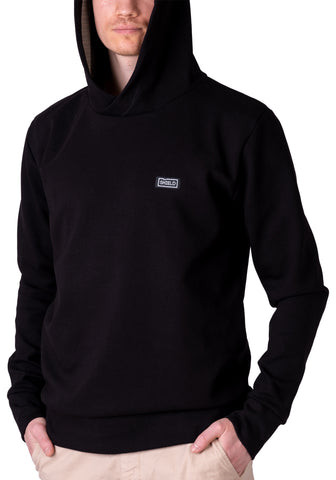
Truth: Airplane mode stops your own phone from transmitting — but it does nothing about your router, your neighbor's Wi-Fi, other people's phones, or any other signal already in the room with you. It only covers the one device. Clothing like our Signalproof Hoodie or Balaclava Hood works the other way around: it's a barrier around your body, so it doesn't matter whose device the signal is coming from. The two aren't competing solutions — a lot of customers use both.
Myth 2: "EMF-blocking stickers or pendants work just like fabric"
Truth: A small sticker or pendant can't physically surround your body, and there's no independent testing we're aware of showing they do anything at all. Shielding that actually works uses a real conductive layer — like the silver-based fabric woven through our T-shirts, beanies, and the Signalproof Blanket — that forms a continuous barrier, not a single point on your chest or wrist.
Myth 3: "More bars on your phone means more exposure"
Truth: It's usually the opposite. A phone struggling to find signal has to transmit at higher power to stay connected, so a dead zone in your house is arguably the situation worth addressing first. Since fabric shielding blocks signal passively either way, it doesn't matter how many bars you've got — that's part of the appeal of something like our Signalproof Undershirt for anyone who's in and out of weak-signal areas all day.
Myth 4: "A phone pouch protects your whole body"
Truth: A Faraday phone pouch, like our Signalproof RFID Faraday Pouch, does exactly one job well: it keeps your phone from transmitting or receiving while it's inside. It doesn't do anything for the rest of you, or for the router, laptop, or smart devices elsewhere in the room. That's why we sell pouches and clothing as separate categories rather than one all-in-one fix — they solve different problems.
Myth 5: "You have to wear it all day, every day, or it's pointless"
Truth: There's no rule that says shielding is all-or-nothing. Most of our customers reach for a specific piece for a specific stretch of their day — a beanie or cap for the commute, a hoodie for the office, the Signalproof Sleep Mask or the blanket at night. Picking the moments that matter to you is a completely reasonable way to use any of this, not a "wrong" way to do it.
Myth 6: "If it's not covered in silver, it's not doing anything"
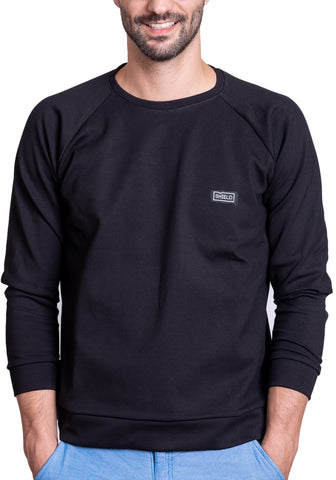
Truth: How a fabric performs depends on the conductive fiber content and how it's woven, not on whether it visibly looks metallic. Plenty of ordinary-looking cotton-blend garments — like our everyday T-shirts and long-sleeve tees — have conductive fiber woven all the way through them; you just can't tell by looking. Judging shielding gear by appearance alone is one of the easiest ways to get talked into something that doesn't actually work.
Myth 7: "A higher silver percentage always means stronger protection"
Truth: The percentage on its own doesn't tell the whole story. How tightly a fabric is woven and how the conductive fiber is blended in matters just as much as the raw number — a dense, well-constructed weave at a lower percentage can hold up just as well as a loose one at a higher percentage. That's why we look at the whole fabric, not just one number on a spec sheet, when we're deciding what goes into a beanie, the Blanket, or anything else in the lineup.
Myth 8: "Signal bounces around and gets amplified inside a shielded hat"
Truth: This one isn't possible, physically. Fabric shielding has no power source — it can only block, reflect, or absorb part of a signal, never add energy to it. Any bit of signal that does get past the weave might reflect off the inside once, but "bouncing" isn't the same as "getting stronger," and there's nothing in a beanie or cap that could amplify anything. If a signal gets in at all, it's weaker going in than it would be with no fabric there — not stronger.
Myth 9: "My phone still rings inside my beanie, so it doesn't work"
Truth: A beanie or cap is a knit garment meant to fit comfortably on your head, not a sealed box — it's built to reduce the signal reaching you while you wear it normally, not to silence a phone sitting loose inside the fabric. Testing it like a sealed pouch (make a call, see if it rings) is testing it for a job it was never designed to do. If you want a full, calls-don't-get-through test, that's exactly what our Signalproof RFID Faraday Pouch is built and sold for — a beanie and a pouch solve different problems, the same way a jacket and a phone pouch do.
The takeaway
Most of these myths come from treating EMF protection as one single magic fix instead of a set of specific tools for specific situations. Airplane mode, a phone pouch, and a shielding garment each do a different, narrow job — none of them do everything, and that's fine. The honest way to think about it is picking the right tool for the moment you're actually in, not looking for one product that replaces thinking about it at all.