

Flying in shielding fabric? Here's what actually happens at airport security
A SHIELD customer's hoodie once stumped an airport X-ray machine — here's the real physics behind why metal-fiber fabric behaves differently at security, and how to fly in shielding gear without a surprise pat-down.
One of the more memorable reviews on our site has nothing to do with phones, Wi-Fi routers, or sleep. It's about an airport.
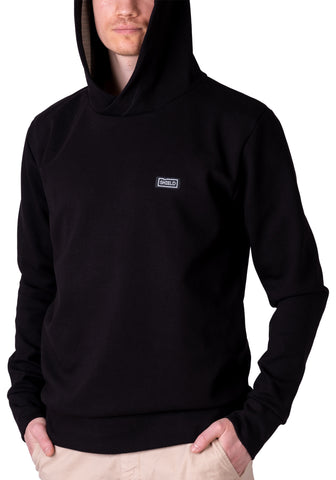
"Went through airport security and the hoody messed with the security X-ray machine, they couldn't see through it, this item definitely works!" — Darren, USA
It's a funny moment, but it's also a genuinely useful window into how shielding fabric actually behaves in the real world — including in places you wouldn't necessarily expect. So let's dig into what's actually happening when a garment woven with metal fiber meets an airport checkpoint, and how to plan around it if you're flying with shielding gear in your bag (or on your back).
Why metal-fiber fabric reads differently to a scanner
Shielding apparel works because it contains a continuous layer of conductive fiber — silver, copper, or nickel, depending on the piece — woven or knitted through the fabric. That same conductivity is exactly the property that airport screening equipment is built to notice, just for a completely different reason.
Most checkpoints combine two technologies. Walk-through metal detectors use pulse induction: a coil sends out rapid pulses that generate a brief magnetic field, and anything sufficiently conductive that passes through — not just solid metal, but a continuous conductive mesh — reflects a signal back to a receiver coil, which is what trips the alarm. Separately, the millimeter-wave body scanners now common at many airports (first developed in the 1990s at the Pacific Northwest National Laboratory with backing from the TSA and FAA, and in U.S. airport use since 2009) send a low-power radio signal at the body and build an image from what bounces back. Metal and other dense materials show up clearly against skin and ordinary clothing on that image.
Neither system is designed with EMF-shielding fabric in mind — they're looking for weapons and contraband — but a garment with a continuous conductive layer across its whole surface area is a very different signal to interpret than a few metal buttons or an underwire. For comparison, even ordinary wardrobe features are known to cause false alarms: European trials of early millimeter-wave scanners reportedly flagged a majority of passengers in some tests over things as mundane as clothing folds, sweat, and buttons, which is part of why France and Germany opted out of the technology altogether. A garment that's deliberately conductive from collar to hem is, understandably, going to register as something worth a second look.
What that actually means for you at the checkpoint
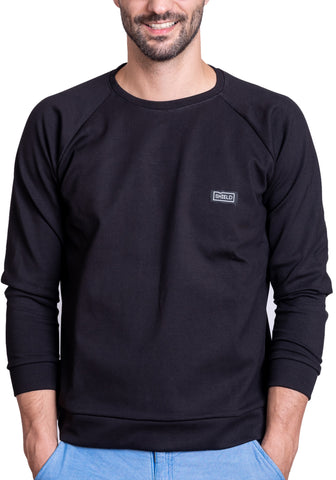
If you're wearing a heavily shielded piece — like our Hoodie, Vest, or Ultimate Outdoor Jacket — through security, the realistic outcome is a secondary screening: a pat-down, a request to remove the item and send it through the X-ray belt separately, or an officer taking a second look at the scanner image. That's not a malfunction and it's not cause for concern; it's the system doing exactly what it's designed to do when it meets something unfamiliar.
A few practical habits make this smoother:
Save the heaviest shielding layers for your bag, not your back. A fully conductive hoodie or jacket is more likely to prompt extra screening than a beanie, scarf, or base layer, simply because it covers more surface area. If you're flying somewhere you'll want serious shielding once you land, it's often easier to pack it in your carry-on and put it on after the checkpoint.
Lighter pieces generally pass through without incident. Caps, beanies, scarves, and thin base layers have a much smaller conductive footprint and, anecdotally, draw far less attention than a full jacket or vest.
Budget a few extra minutes. If you do get pulled for secondary screening, it's typically quick — but it's not the moment to be sprinting for a tight connection.
Mention it if asked. TSA officers don't need (or want) a lecture on EMF physics, but a simple "it's a garment with a metallic fiber lining" is accurate, easy to say, and tends to resolve things faster than a confused shrug.
The bigger picture: airports are RF-dense places
Security scanners are just one layer of a much busier radio-frequency environment. Between terminal Wi-Fi, cellular infrastructure serving thousands of travelers at once, radar used for air traffic control, and — on many routes now — in-cabin Wi-Fi once you're airborne, airports and aircraft are among the more RF-active environments most people pass through regularly. Researchers have specifically measured and compared RF exposure levels in airport terminals and in-flight, with and without onboard Wi-Fi active, as part of ongoing work to simply characterize what these environments actually look like. It's a detail worth knowing as a traveler, independent of any judgment about it one way or the other — it's just part of the overall picture of a travel day, the same way your exposure profile shifts between a home office and a packed commute.
Packing shielding gear for a trip
If shielding apparel is already part of your routine, travel days are really just a packing-logistics question. Keep lighter, low-profile pieces — beanies, scarves, undershirts — in regular rotation for the checkpoint itself, and treat bulkier pieces as "landing gear" you put on once you're through. A Faraday pouch for your phone is worth keeping in your carry-on too, separate from your shielding apparel, for the parts of a trip (hotel nightstands, conference badges) where you want a device fully isolated rather than worn.
None of this is a reason to leave shielding gear at home — it just means packing with a little more intention than you would a regular wardrobe. And if nothing else, you'll have a better story than "my jacket set off the metal detector" the next time a stranger asks about the fabric.