

The EMF variable most biohackers ignore
Spend enough time in biohacking circles and you start to notice a pattern.
People obsess over the obvious levers first.
Light. Sleep. Nutrition. Training. Recovery.
You’ll see detailed discussions about circadian rhythms, glucose spikes, cold exposure, and wearable data streams. Entire routines get built around improving a few percentage points in HRV or squeezing out deeper sleep cycles.
And then there are the variables that sit quietly in the background—rarely discussed, often dismissed, and almost never tested with the same rigor.
EMF exposure is one of those variables.
Not because it’s proven to be a dominant factor. And not because it’s irrelevant. But because it tends to fall into an uncomfortable category: difficult to isolate, easy to misunderstand, and surrounded by both exaggeration and skepticism.
For a long time, most biohackers simply ignored it.
That’s starting to change—not because of new beliefs, but because of a shift in mindset.
From belief to measurement
The biohacking mindset has never been about accepting claims at face value. If anything, it’s built on questioning them.
So instead of asking, “Are EMFs harmful?”, a different question has started to emerge:
“What happens if I treat EMF exposure like any other environmental input—and measure the outcome?”
That shift matters.
It moves the conversation away from speculation and into something much more practical: experimentation.
After all, biohackers already accept that relatively subtle environmental factors can influence performance. Light exposure in the evening can affect sleep timing. Room temperature can influence recovery. Noise can fragment rest without fully waking you.
None of these are dramatic in isolation. But over time, small inputs add up.
EMFs, at the very least, belong in the same category of testable variables.
The challenge: You can’t optimize what you don’t isolate
One reason EMFs have been largely ignored is simple: they’re hard to isolate cleanly.
You can turn off the lights. You can change your diet. You can adjust your training load.
But EMF exposure is woven into modern environments—phones, laptops, WiFi networks, public infrastructure. It’s continuous and often invisible, which makes it difficult to approach with the same clarity.
And biohackers tend to avoid variables they can’t control.
But that doesn’t mean they can’t be tested.
What some have started doing is not trying to eliminate exposure entirely, but instead introducing controlled changes—small enough to be practical, but structured enough to observe.
Not dramatic interventions. Just adjustments.
A phone moved away from the body during sleep.
A workspace slightly simplified.
Periods of reduced device interaction.
Nothing extreme. Just enough to create contrast.
Then they watch the data.
Patterns over time, not overnight results
This is where the approach becomes distinctly biohacker-like.
There’s no expectation of instant transformation. No assumption that a single change will produce a dramatic effect.
Instead, the focus is on trends.
Sleep metrics over several nights.
HRV patterns across weeks.
Consistency in recovery scores.
Sometimes nothing changes. That’s a valid result.
Sometimes there are small shifts—subtle enough that they would be easy to dismiss without tracking, but consistent enough to raise questions.
And that’s usually where curiosity deepens.
Reducing friction: The real optimization game
At a certain point, the question stops being “Does this variable matter?” and becomes something more practical:
“If it does matter, what’s the lowest-friction way to manage it?”
Because this is where many optimization strategies fail.
Turning off all wireless devices, redesigning living spaces, or constantly modifying behavior quickly becomes impractical. High-friction solutions don’t scale into daily life, no matter how effective they might be in theory.
Biohackers, especially experienced ones, tend to move toward systems that run in the background.
Things that don’t require constant attention.
Things that don’t interfere with work or mobility.
Things that don’t rely on perfect discipline.
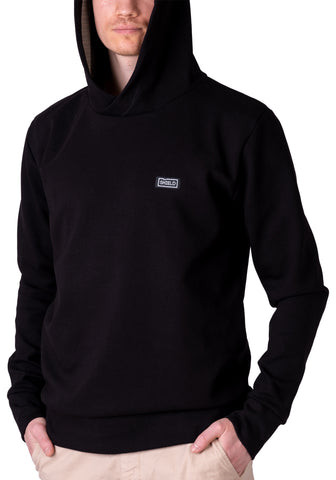
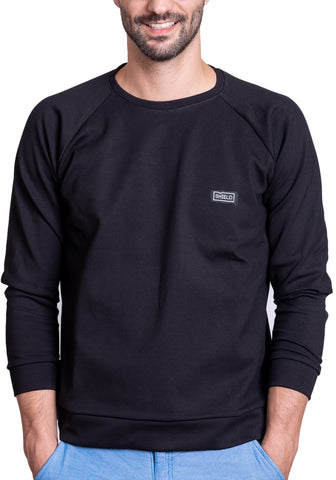
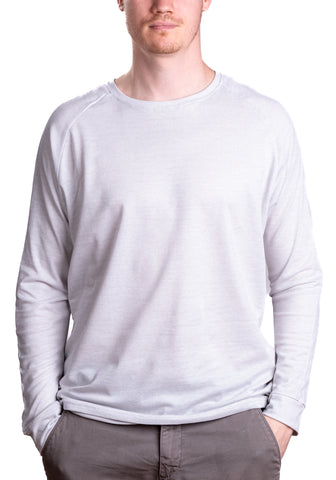
This is exactly where EMF-protective clothing starts to enter the conversation—not as a primary solution, but as a passive layer.
A different kind of tool
Clothing doesn’t require a decision every hour. It doesn’t depend on your environment. It doesn’t interrupt your workflow.
You wear it, and it does its job in the background.
For someone thinking in systems, that’s a very different proposition compared to behavioral changes.
It’s not about eliminating exposure completely. It’s about introducing a consistent modifier—something that can be included in an experiment without disrupting everything else.
That makes it easier to test.
And in biohacking, anything that makes testing easier tends to get adopted faster.
Where it starts to make sense
Interestingly, most people who experiment with EMF reduction don’t apply it universally.
They apply it selectively.
During long work sessions surrounded by devices.
While traveling through dense, high-signal environments.
In situations where control over the environment is limited.
Not because these are proven “high-risk” scenarios in a medical sense—but because they are logically high-exposure situations.
And biohackers tend to think in terms of exposure density, not just presence or absence.
Cutting through the noise
The EMF space is crowded with strong opinions.
On one side, exaggerated claims that promise too much without measurable backing.
On the other, complete dismissal without any attempt to test individual response.
Both positions miss the point.
Biohacking has never been about taking sides. It’s about running experiments.
And experiments require restraint.
No stacking ten interventions at once.
No drawing conclusions from a single night of data.
No assuming causation without repetition.
Just controlled inputs and observed outputs.
Where SHIELD fits into this philosophy
At SHIELD, we don’t approach EMF protection as a belief system.
We see it as a tool—one that fits into a broader framework of personal optimization.
Our clothing is designed to operate across a wide frequency range (10 MHz to 40 GHz), aligning with the environments most people move through daily. But more importantly, it’s designed to be passive.
No routines to follow.
No behavior to change.
No disruption to your workflow.
Just a layer you can introduce, measure, and evaluate like any other variable.
Because ultimately, that’s what matters.
Run your own data
The most consistent trait among experienced biohackers isn’t what they believe—it’s how they think.
They don’t ask, “Is this true?”
They ask, “What happens when I test it?”
EMF exposure doesn’t need to be accepted or rejected upfront.
It just needs to be treated like everything else in your stack:
Something you can measure. Something you can modify. And something you can evaluate over time.
No hype. No assumptions.
Just data.