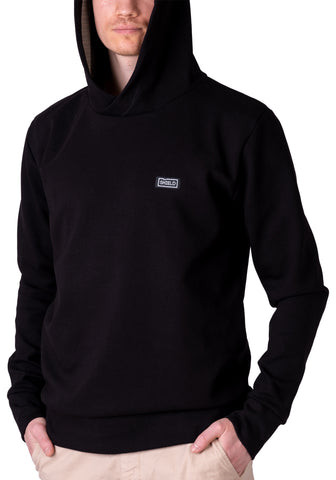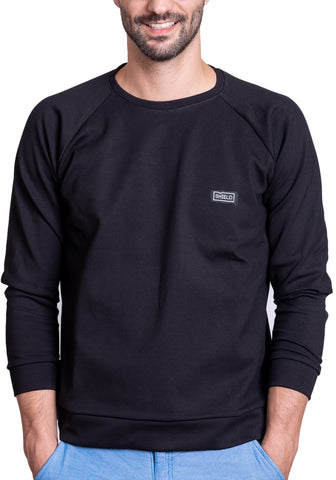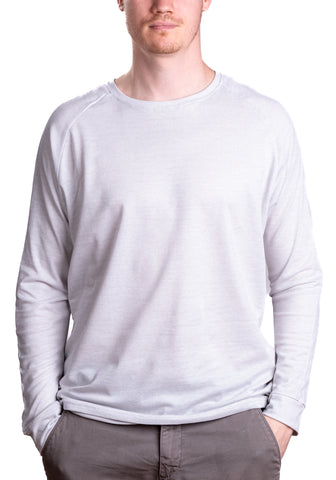


Why the pull-on hood belongs in your protection kit for high-exposure environments
Some spaces feel calm and natural. Others are dense with technology, signals, and constant connectivity.
Our signalproof balaclava hood is designed for those moments when you want an added layer of coverage around your most exposed areas — not as an everyday garment, but as a purpose-built protective layer for specific situations.
Designed for high-exposure situations
Instead of being something you wear all day, this hood is best understood as part of a situational protection system.
It is especially relevant when you are in environments such as:
-
Busy city centers with dense wireless infrastructure
-
Airports and transport hubs with constant device activity
-
Office spaces with many overlapping networks
-
Travel situations where exposure is prolonged
-
High-device environments like coworking spaces or tech facilities
In these settings, your head, neck, and upper shoulders are continuously surrounded from multiple directions.
This is where a dedicated covering layer becomes meaningful.
Focused coverage where it matters most
The design follows the natural exposure points of the upper body:
-
Head — central point of environmental interaction
-
Ears — constant proximity to communication devices
-
Neck — direct pathway between upper and lower body exposure zones
-
Upper shoulders — wide surface area often overlooked in protection strategies
Instead of trying to cover everything, it focuses on the areas most directly exposed in real-world situations.
Material behavior in real environments
The shielding fabric is designed to interact with common wireless environments in a consistent way.
Rather than reacting only to one frequency or one device type, it performs across a range of everyday signals such as:
-
Mobile networks
-
WiFi routers
-
Bluetooth devices
-
Ambient infrastructure signals
The key idea is not isolation — but consistent reduction of exposure in high-signal environments.
What the performance graph shows
The following graph illustrates how the material behaves across common frequency ranges found in real-world environments:

To translate the graph into everyday terms:
| Shielding Level | Signal Reduction | Real Impact |
|---|---|---|
| 10 dB | 90% | Minor reduction |
| 20 dB | 99% | Noticeable improvement |
| 30 dB | 99.9% | Strong shielding |
| 40 dB | 99.99% | Professional-grade attenuation |
| 50 dB | 99.999% | Laboratory-level reduction |
The measured curve of this balaclava sits in the high-performance range used in professional EMI textiles and enclosures.
Many low-quality “EMF fabrics” fail because they only work at a single frequency.
The graph shows:
- No major performance collapse at higher GHz bands
- Consistent attenuation across 0.5–2.5 GHz range
This is critical because modern exposure includes:
- 2.4 GHz (WiFi, Bluetooth)
- 1.8–2.1 GHz (mobile networks)
- 700–900 MHz (long-range cellular)
A stable curve = real-world usability
What this means in practical terms:
-
Performance stays consistent across common real-world wireless environments
-
No sharp drop-offs in typical exposure ranges
-
Designed for broad, situational use rather than narrow scenarios
When People Typically Use It
Instead of being an everyday garment, the hood fits naturally into specific contexts:
-
When traveling through dense infrastructure zones
-
During long periods in connected indoor environments
-
In workplaces with heavy device usage
-
In moments when additional coverage feels useful or intentional
-
As part of a broader personal protection routine
It is something you reach for when the environment calls for it.
👉 Available here:
https://shieldapparels.com/collections/emf-protective-headwear/products/signalproof-balaclava-hood